Why make art? A journey into my photographic history.
 AuthorPostedby
Is photography art? That is a question that I never really have an answer for. People way more intelligent than myself, have already answered this, probably definitively, so I’m going to sidestep this question and just assume that my work is based in art. For me, making photos is art. It is also social documentary and sometimes street photography. Photography once I had the courage to try becoming a full time photographer, has been a constant throughout my working life. I remember when I was young, my parents took me to see a local commercial photographer. This was in Hamilton, New Zealand, when I must have been about 13 or 14 years old. And I wanted to be a photographer, He painted such a difficult picture of being a photographer for a young person, that I was nearly put off. It wasn’t till about 10 years later that I decided, that iI really did want to become a pro photographer. I started buying cameras, I mean serious cameras, in my early twenties and slowly started making images, but most of my images from that time are what I would consider garbage. I did not have an academic background, or an artistic one either my parents where shopkeepers.
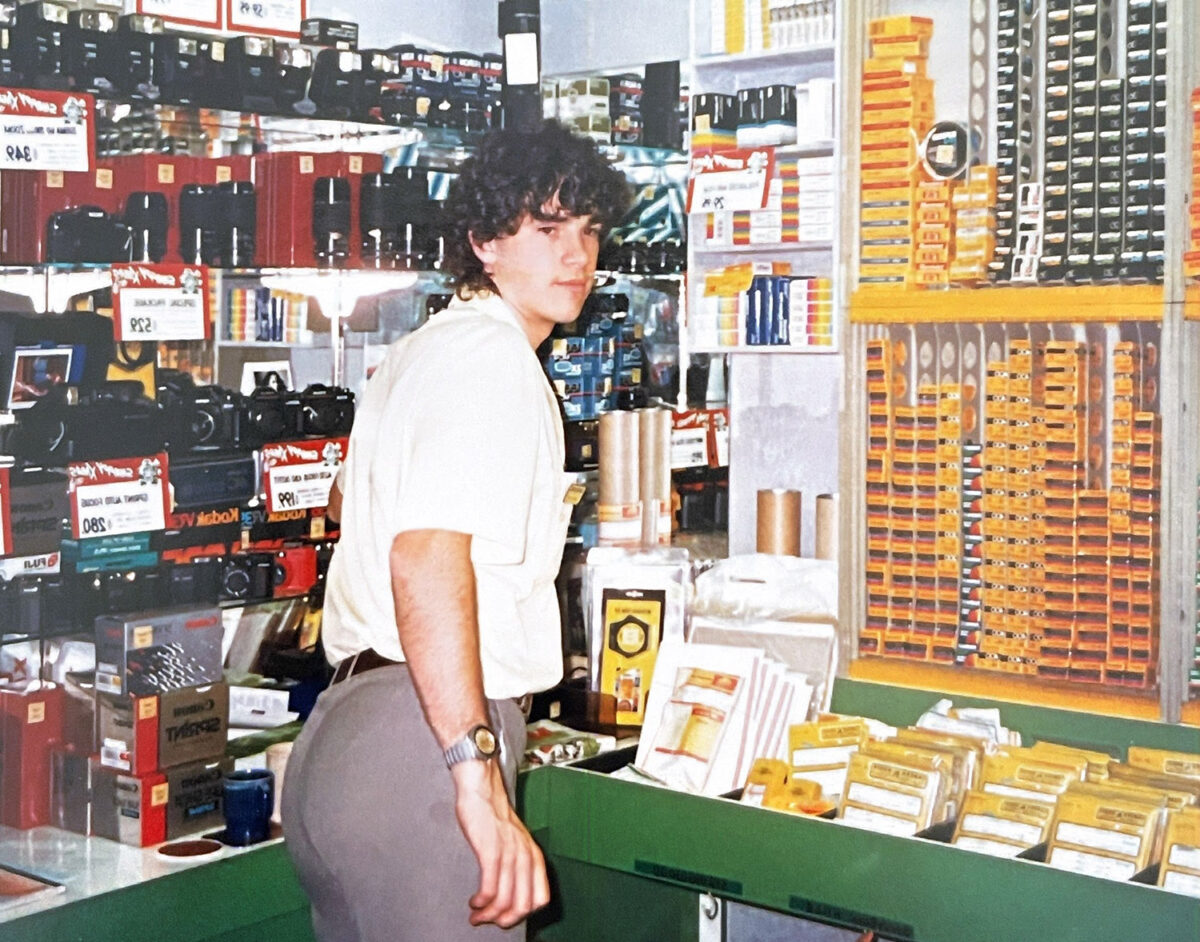
When left school at the age of 15, I didn’t understand art, art history, culture. I was living in New Zealand’s fourth largest city, so it wasn’t like I was surrounded by anything of artistic interest. I was 18 when I got to Brisbane, Australia, it wasn’t much better. In the 1980s, it was pretty grim culturally for photography. I wanted to be a photographer and the only thin I knew was retail, as I had worked in the family convenience store. So to get into art college, I needed to work in the photography industry as part of the entry requirements. The image at the start of this article is me as a 25 year old working my first job in photography selling cameras, film and learning how to colour print in a camera store that had. mini lab. I did start art college but ended up leaving as it was not teaching me what I needed to know. So I started by doing because I did not know how else to do it. this was before the internet. I started by showing my portfolio to local advertising agencies n Brisbane and got commercial photography jobs. Then fell into photographing models because I’d met a few models who wanted portfolio images, and then I decided that I needed to learn more. So I moved to Sydney. Because, I’d arrived from Brisbane they didn’t really take me that seriously because it’s a bit like coming from a kind of Hicksville if you’re living in Australia at that time. Then I decided that since I had a British passport, I could go to London. And that was 1991.
When I arrived in London, I didn’t know anyone. I picked up the yellow pages and found various model agencies and started testing models. Unfortunately, at the time model agencies didn’t pay for testing. I spent 7 months in London building a new portfolio. Then I ran out of money, so I went back to Sydney for another 3 years before finally returning to London in 1994. I have lived in Europe ever since. Surviving as a photographer, initially in London, then I travelled and spent time in Athens, Milan, New York before moving to Paris, where I spent 4 years. Eventually, I decided that I needed to return to London because I had gotten really ill. I’d been squatting in Paris and not really succeeding because I’d gone down some dark rabbit holes exploring how to make work that I liked and I wasn’t getting anywhere, but I was still a photographer, and for me that was important.
Then I got lucky and met the woman who had become my wife who encouraged me to go and study. I managed to get accepted as a Mature age special entry student at Goldsmiths, so I could do an MA in Photography and Urban Cultures, which completely changed the way I see the world. It gave me a comprehensive understanding of the social, political, historical and cultural concepts behind the images that I needed to make. My work changed from fashion to social documentary and using street photography techniques to make the kind of images that I make now. At first, these images weren’t very good because I’d gone from a situation where I had permission to make images, to a situation where I needed to give myself permission to make the images that I wanted to. And my early street photography were utter rubbish, if I am being honest. I feel that my images have gotten better, because I’ve become more attuned to the world around me. I’m able to see things, anticipate things in a way that I was never able to before, and I kind of know what I’m looking for in that I want to document our human condition in the social landscapes that we inhabit, and that for me is a really important thing. It enables me to see, see the world for what it is, not always good, not always bad, and sometimes the concepts that are floating in my head are really difficult to visualise using a medium that is photography. Because photography shows things, but it doesn’t necessarily show what happened before or after, or an intellectual/artistic concept well. It just describes very well what is in front of the camera and what the photographer chose to look at and the moment in time that the photographer chose to press the shutter to make the image.
Have I been successful as a photographer? Well, it depends on how you rate success. I have had no major gallery exhibitions, no books yet to date. I have had magazines publish my work, even feature my work on their covers. But that was a while ago. Now I am doing social documentary photography, and that is a much harder thing, I do it because I love what it can say, not because it’s going to earn me big money, at this stage in my life. When I think about it, my ambitions when I started all those years ago was just to be a photographer, and in many ways, that is effectively what I have become. And I have to consider that in this day and age with the way cameras have changed, photography has changed, the medium that we use has changed, going from film to digital. Even the clients who used to book and pay for photography how they have utterly had their business models destroyed. The newspapers are no longer what they were. The magazines have functionally disappeared. The traditional social documentary clients have reduced their budgets to the point where they barely pay. And the kind of stories that they often publish are not the kind of work that I want to make. And yet there are ways that a photographer can succeed. It involves crowdfunding, different payment models, sponsorships, there are all sorts of different ways of making work and getting it out there. The internet has facilitated the ability for the photographer to go direct to an audience, or in other words the audience can become the client. This liberates and removes some of the gatekeepers to successful photography projects. And this, if photographers get good at this, will be ultimately liberating.
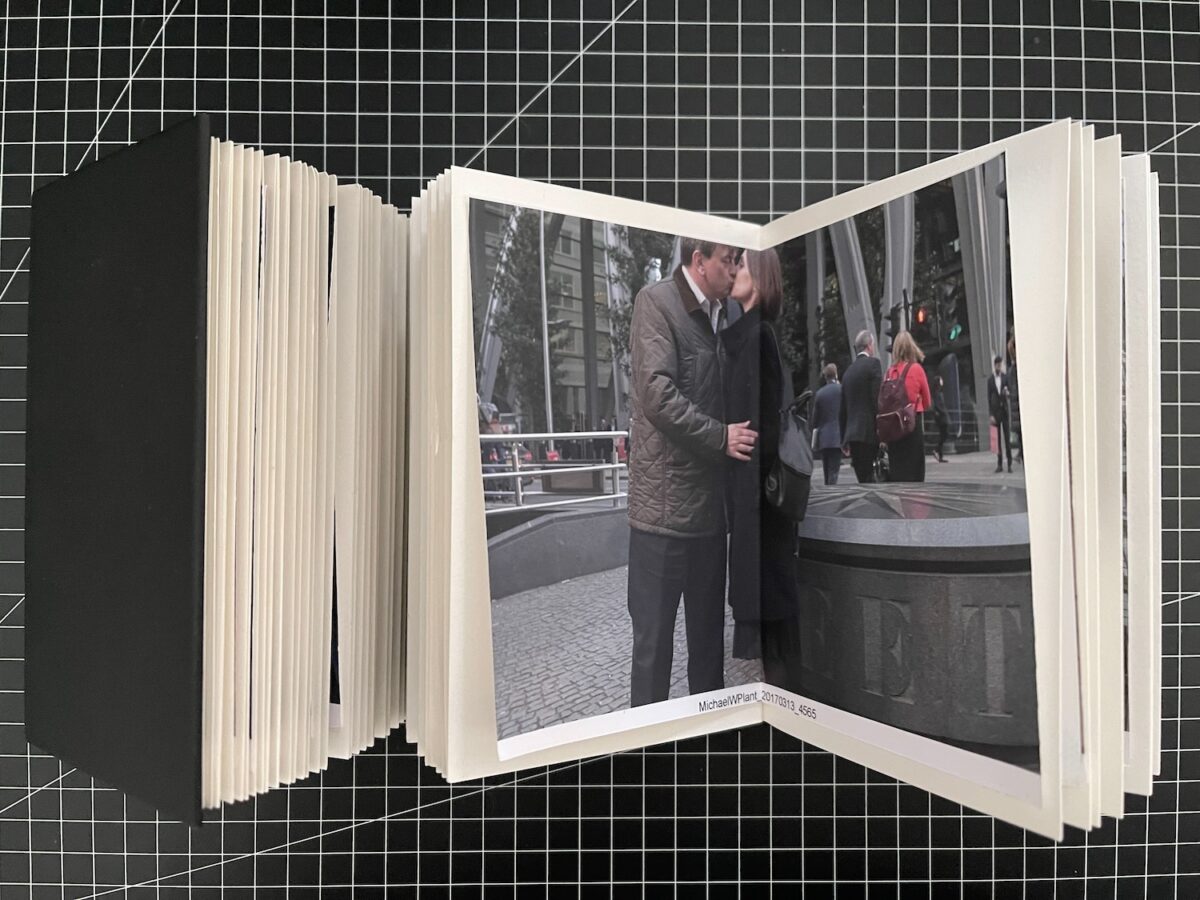
Speaking of liberating, I have finally managed to produce my book dummy for the work that I photographed in the City of London, and now I need to get out, to find publishers to get this work into print, and this is really exciting, because I actually like what I’ve done. For a long time, I wasn’t sure if the project had merit, but now that I can see it in a dummy form, even though I know once I get a book designer involved it will change, it’s still a project that is moving along, and that is really rewarding to at least get it to this stage.
I have thought about this and realised that a lot of my progress as a photographer has been sheer bloody-mindedness as to not give up when the going got tough, and pig-headed stubbornness because I didn’t know what else I wanted to do, and an underlying resilience that if you’d asked me when I was 13/14, and remember that commercial/wedding photographer at the beginning in New Zealand who had told me how hard it was to be a photographer. At that stage I wasn’t aware as a young man, that I had this inner resilience and positivity that would continually keep me being able to reinvent myself to still remain being a photographer, and that is something quite special. I now need help. I need to find people who can introduce me to photobook publishers, who can support the work that I’m doing, so that I can get over the line with actually getting the book, my first photo book published.
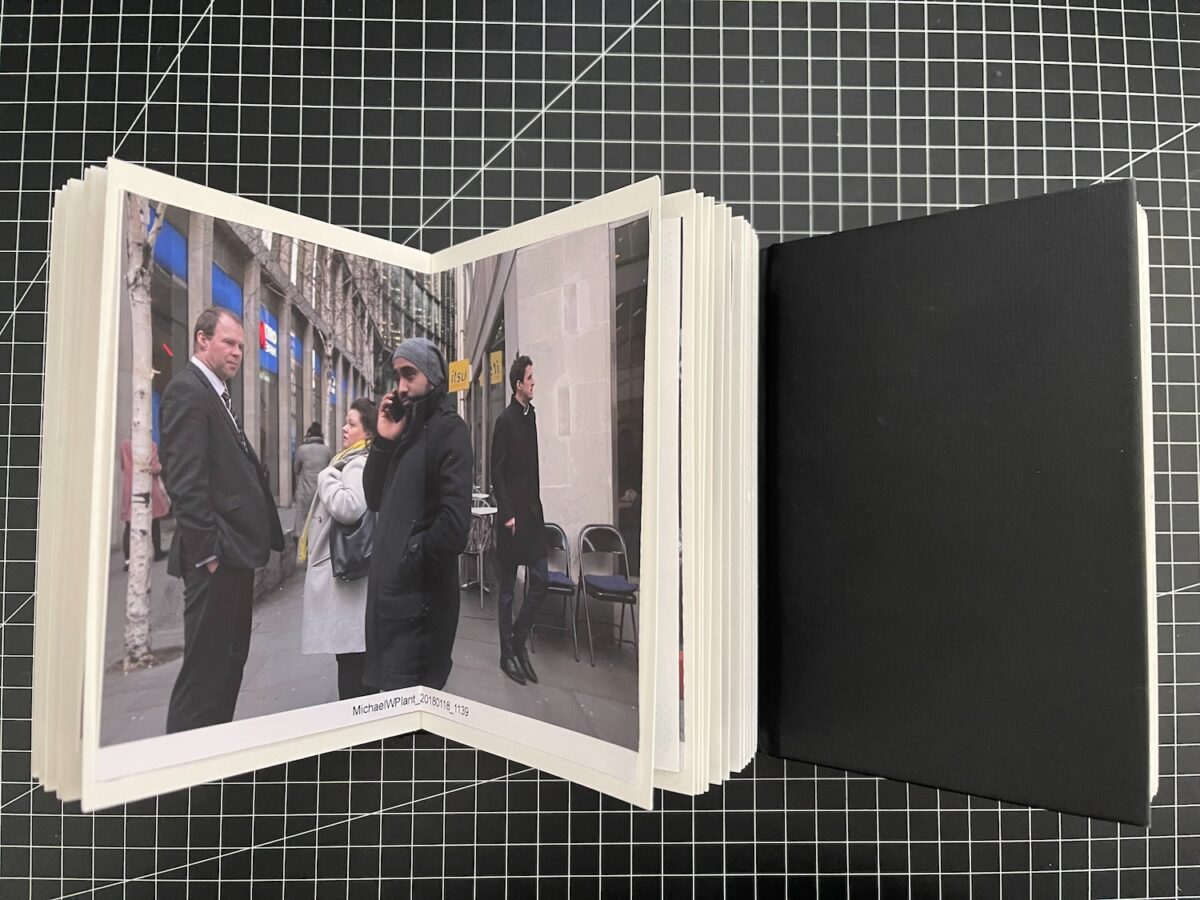
Photo Book Dummy